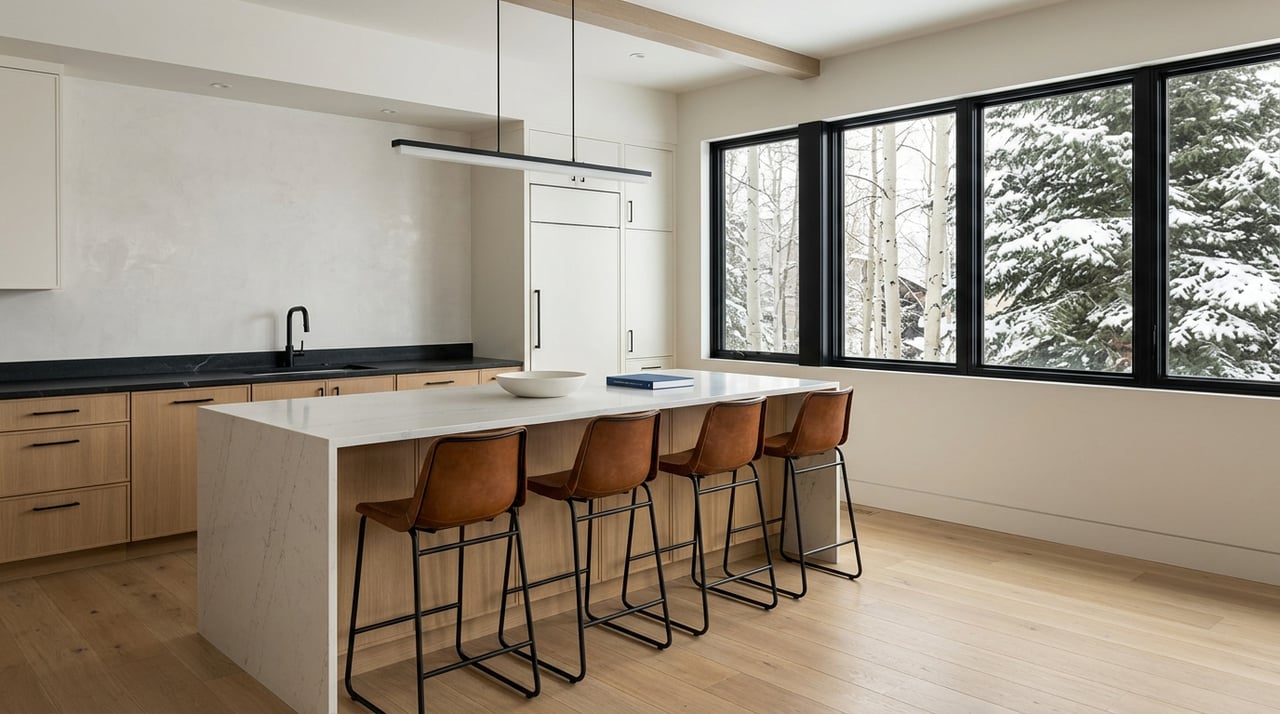
New Construction in Winter Park CO: A Buyer’s Guide
May 14, 2026
May 14, 2026
If you hear “new construction” in Winter Park and picture one simple category of homes, think again. In this market, new construction can mean anything from detached homesites to resort-area mixed-use development to deed-restricted workforce housing. If you are trying to decide whether a newly built property fits your lifestyle, rental plans, or long-term goals, it helps to understand how Winter Park works. Let’s dive in.
In Winter Park, new construction is not one standard product type. The town’s active development pipeline includes detached-lot subdivisions, resort-area redevelopment, and workforce housing projects, which creates a wider range of options than many buyers expect.
Current town-tracked projects include Wolves Lair with 12 single-family detached lots and Bear Trail Homesites with 7 single-family detached lots. The resort and base-area plans also describe a year-round mixed-use district with housing, commercial uses, trail connections, roads, and a new gondola connection to downtown.
That matters because your first question should not just be “Is it new?” It should be “What kind of new construction is this, and how will I use it?”
Winter Park’s local guidance and planning documents point to a mix of housing types. Depending on the project, you may see detached single-family homes, attached two-family or duplex homes, townhome-style product, resort-area units, and housing with deed restrictions tied to workforce affordability.
For buyers, that means the right fit often comes down to your goals. A detached home may offer more privacy and flexibility, while an attached home or resort-area unit may line up better if you want lower day-to-day maintenance or easier access to amenities.
If you want a custom or semi-custom mountain home, detached lots are part of the current pipeline. Projects like Wolves Lair and Bear Trail Homesites show that single-family construction remains an active part of the Winter Park market.
These opportunities can appeal if you are focused on space, design preferences, and a more standalone ownership experience. They can also involve more site-specific planning, engineering, and finish decisions than a move-in-ready resale home.
Winter Park’s build materials and design review process specifically address detached single-family homes and attached two-family or duplex homes. Buyers should also keep an eye on townhome and condo-style opportunities as the market evolves.
Colorado’s 2025 HB25-1272 is relevant here because it was intended to encourage more entry-level condo and townhome housing by reducing certain construction-defect litigation barriers and allowing a developer to opt into a warranty and third-party inspection program. If you are comparing attached new construction options, it is smart to ask how the builder is approaching warranties and inspections.
Some of the most visible long-term change in Winter Park is tied to the resort and base area. Local plans describe a year-round mixed-use district with housing, commercial uses, trail connectivity, roads, and a gondola link to downtown.
For you as a buyer, that can shape convenience, access, and long-term area character. It can also influence whether a property feels more like a private retreat, a rental-oriented hold, or a blend of both.
Not all new construction in Winter Park is aimed at second-home buyers or vacation ownership. The town’s housing projects page includes Hideaway Junction Phase I, described as ten two- and three-bedroom single-family residences deed-restricted for workforce affordability, with Phase II planned to add twenty more homes.
Fireside Creek Apartments is another project in the pipeline, with fifty workforce apartment units. This is important context because it shows that Winter Park’s housing growth includes multiple goals and buyer profiles, not just resort demand.
Winter Park follows the 2021 codes, and the town’s Building Division reviews plans and inspects work for code compliance. For single-family and duplex projects, there is a Minor Site Plan process before the building permit stage.
Applicants are asked to submit materials at least three weeks before the Planning Commission hearing. The town also notes a $100 submittal fee and a $2,000 deposit tied to exterior completion and revegetation deadlines. If the property is in an HOA, HOA approval is required before submittal.
For buyers, this matters even if you are not building from scratch. A home in pre-construction or active construction may still be moving through local review steps, and those steps can affect timeline expectations.
Winter Park’s building-permit submittals can include:
The town asks applicants to allow at least two weeks for the first round of review comments. After approval, foundation and setback documentation is required before framing, depending on lot-line conditions and whether a variance applies.
Final occupancy depends on the last round of building, trade, stormwater, and fire-system approvals. After the final inspection, the town says it needs about 24 hours to prepare occupancy documents.
Building in Winter Park is not the same as building in a lower-elevation suburban market. Alpine weather, snow, wind, daylight, and site access all shape how projects move.
The town’s snow-load guidance references ASCE 7 and the Colorado Design Snow Loads report and map, and the building FAQ states a minimum design wind speed of 105 mph. That means roof design, drifting, engineering, and exposure are especially important in this market.
Before excavation begins, the town requires a pre-disturbance inspection. That includes erosion control, a stabilized driveway entrance, a marked limit of disturbance, tree protection, soil stockpile marking, property-corner staking, and a concrete washout area.
These are not small details. In a mountain environment, site handling can affect drainage, erosion, vegetation, and how smoothly construction progresses.
Winter Park also has local construction scheduling rules. Work that requires a building permit, grading permit, or development improvements agreement is limited to 7 a.m. to 7 p.m. Monday through Friday and 8 a.m. to 6 p.m. on weekends.
In practical terms, weather delays and shorter seasonal building windows can have a bigger impact here than buyers from other markets may expect. If you are buying early in the process, timeline flexibility is part of the package.
Winter Park’s conditions make fire safety and water use part of the new construction conversation. The town prohibits open fires and burning inside town limits without prior approval and notes the area’s proximity to the Arapaho National Forest.
The town also states that Grand County is currently in Stage 3 Exceptional Drought, with indoor water rationing and outdoor water restrictions recommended. For buyers, that makes low-water landscaping and practical exterior planning worth discussing early.
If you are considering a new home, condo, or townhome with rental potential, location matters. Inside the Town of Winter Park, nightly or under-31-day rentals require a business license, sales-tax remittance, and short-term rental registration before advertising.
The town also requires proof of a Fire & Life Safety Inspection for short-term rental registration and renewal. Starting August 1, 2025, renewals require proof from the prior 12 months.
Guest-facing rules also matter. The town lists quiet hours from 10 p.m. to 8 a.m., no overnight parking on town streets from November 1 to May 1, and no leaving trash out overnight.
A property in unincorporated Grand County follows different short-term rental rules. The county requires an annual permit, a maximum occupancy of 16, two local emergency contacts who are Grand County residents and can respond within one hour, and compliance with county parking, trash, and safety rules.
The county also requires the permit number to appear in listings and notes that recorded covenants still control if restrictions prohibit short-term rentals. For you, that means rental feasibility is never just about the home itself. It is also about jurisdiction, recorded restrictions, and HOA rules.
New construction can feel exciting and straightforward on the surface, but the smartest buyers slow down and ask local questions. In Winter Park, those questions can protect both your lifestyle and your budget.
Here are some of the most useful ones to ask:
These questions are especially important if you are buying remotely or balancing personal use with rental goals. In a mountain market, the fine print often matters just as much as the floor plan.
Buying new construction in Winter Park can be a great fit, but it works best when you evaluate more than finishes and views. You also want to understand the local process, the product type, the site conditions, the rental rules, and how the property will function across all four seasons.
That is where local context becomes valuable. If you are comparing a resort-area unit, a townhome, or a detached homesite, having clear guidance can help you weigh lifestyle fit and ownership realities at the same time.
If you are exploring new construction in Winter Park and want a grounded, local perspective on product type, rental considerations, and development context, reach out to Kara Mullane for tailored guidance.
Stay up to date on the latest real estate trends.
Work with a dedicated real estate professional who specializes in mountain living in the Winter Park area. With a strong background in real estate development and investment, clients are guided through every step of buying or selling with clarity and confidence in one of Colorado’s most dynamic markets.
KARA MULLANE
78977 US Highway 40 Winter Park, CO 80482